Trump National Parks Pass Lawsuit: Legal Challenges to the 2026 “Resident Pass” Design
In a move that has sparked intense debate among conservationists and political analysts, the 2026 Trump National Parks Pass lawsuit has become a focal point of federal litigation. Filed in December 2025 by the Center for Biological Diversity (CBD), the lawsuit challenges the Department of the Interior’s decision to replace the annual contest-winning photo of Glacier National Park with a “patriotic” graphic featuring President Trump and George Washington. The case raises critical questions about the interpretation of the Federal Lands Recreation Enhancement Act (FLREA) and the boundaries of executive branding on public lands.
The Core Legal Dispute: FLREA and Public Participation
The primary argument in the Trump National Parks Pass lawsuit is that the administration violated the Federal Lands Recreation Enhancement Act of 2004. According to the statute, the Secretary of the Interior is required to hold an annual public competition to select the image for the America the Beautiful Pass. For the 2026 pass, photographer Akshay Joshi won the contest with a stunning image of Montana’s Glacier National Park.
The plaintiffs allege that the administration executed a “bait-and-switch” by relegating the contest-winning photo to a newly created, more expensive “Nonresident Pass” ($250), while placing the President’s portrait on the standard $80 “Resident Pass.” The lawsuit argues that this unilateral change disregards the law’s requirement for public participation and turns a non-partisan educational tool into a “partisan political platform.” This clash over statutory compliance mirrors the technical disputes found in the Walmart class action lawsuit 2025 regarding administrative overreach.
The “Resident vs. Nonresident” Fee Structure
Beyond the artwork, the Trump National Parks Pass lawsuit targets the administration’s new tiered pricing system. Starting January 1, 2026, the Interior Department implemented a significant fee hike for international visitors. While U.S. residents continue to pay $80 for an annual pass, nonresidents must now pay $250. Additionally, international tourists without a pass face a $100 per person surcharge at the 11 most-visited parks, such as Yellowstone and Yosemite.
While groups like the Property and Environment Research Center (PERC) have praised the fees as a way to address the multi-billion dollar maintenance backlog, the CBD’s lawsuit claims the creation of these distinct “Resident” and “Nonresident” passes is expressly prohibited by FLREA, which only authorizes seven specific types of passes. This debate over “fair share” vs. “legal authority” is a theme also litigated in the Capital One interest rates lawsuit regarding fee structures and consumer disclosure.
Politicization and the “Birthday” Free-Entry Day
The Trump National Parks Pass lawsuit is also set against a backdrop of broader policy changes within the National Park Service (NPS). In late 2025, the administration removed Martin Luther King Jr. Day and Juneteenth from the list of fee-free entrance days, replacing them with June 14—which serves as both Flag Day and President Trump’s birthday. The lawsuit suggests these moves are part of a coordinated effort of “self-aggrandizement” that violates the spirit of the National Park System. This intersection of personal branding and public service is a common thread in cases like the The View lawsuit Leavitt, where public identity and official duty collide.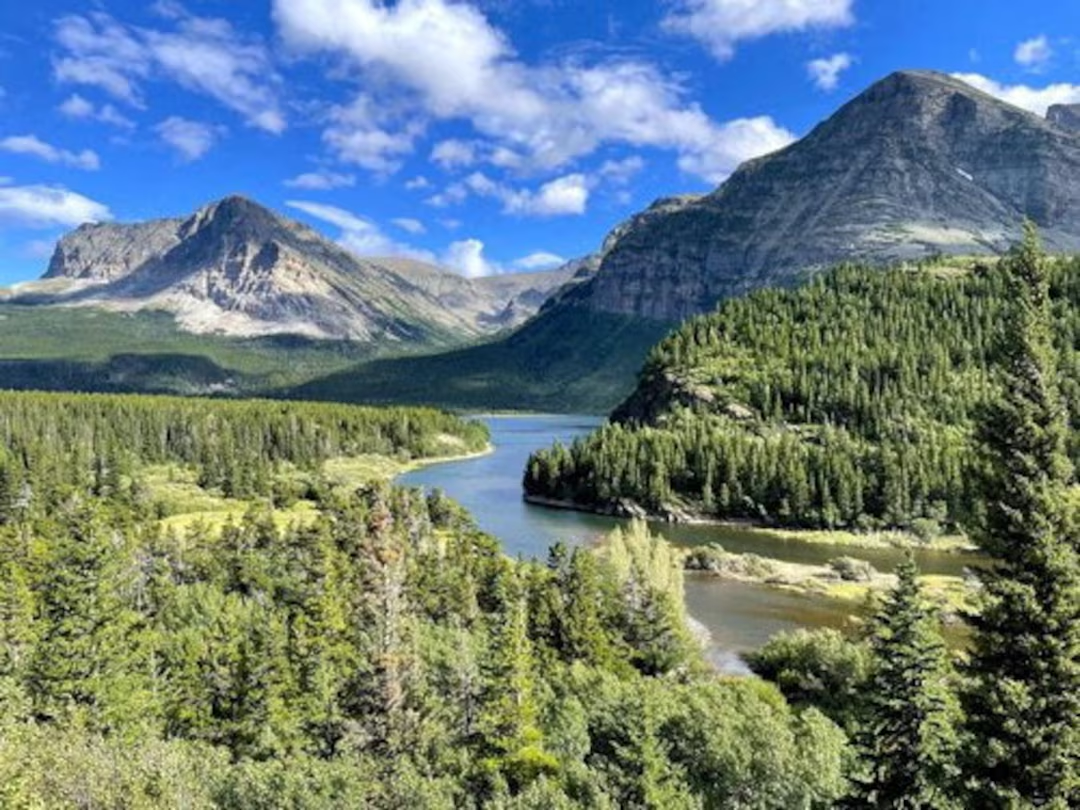
The 2026 “Erasure of Science” Litigation
In a related legal development in February 2026, a coalition of conservation and historical organizations filed a separate suit (National Parks Conservation Association v. Burgum). This case alleges that the administration is “erasing history and science” by forcing the removal of exhibits related to climate change and slavery. The lawsuit highlights the removal of climate change signage at Glacier National Park—the very park originally intended to be on the 2026 pass. These parallel cases suggest a comprehensive legal challenge to the “America First” agenda within the NPS, similar to the multi-front litigation seen in the Google class action lawsuit 2025.
Key 2026 Status for Visitors:
- Resident Pass ($80): Currently features the Trump/Washington portrait. NPS guidelines prohibit covering the image, with potential fines for “defacing” federal property.
- Nonresident Pass ($250): Features the contest-winning Glacier National Park photo.
- Legal Standing: A preliminary injunction hearing is expected in late spring 2026 to determine if the “Trump portrait” passes must be recalled or if the winning contest photo must be restored to the main pass.
Conclusion
The Trump National Parks Pass lawsuit represents a fundamental disagreement over the purpose of America’s most iconic landscapes. While the administration argues that “modernized graphics” and “America-first” fees are necessary for financial sustainability, plaintiffs contend that the politicization of the pass system undermines the democratic values of the National Park Service. As the case moves through the D.C. District Court in 2026, the outcome will likely dictate whether the National Parks remain a “neutral sanctuary” or become a canvas for executive branding.