Trump National Guard Lawsuit 2026: D.C. Legal Battle Continues as State Deployments End
As of March 23, 2026, the intense legal conflict over the domestic use of the military has entered a new phase. While the Trump administration officially withdrew National Guard troops from major cities like Los Angeles, Chicago, and Portland in January 2026 following a series of court defeats, a high-stakes legal battle remains active in the nation’s capital. The District of Columbia v. Trump lawsuit, filed by D.C. Attorney General Brian Schwalb, is currently before the U.S. Court of Appeals as the city seeks to end what it characterizes as a “military occupation.” This struggle over the Posse Comitatus Act and the limits of executive power is a defining 2026 issue, drawing parallels to the transparency mandates in the Google class action lawsuit 2025.
The D.C. Deployment: “Make D.C. Safe” Under Review
The ongoing D.C. National Guard lawsuit centers on “Operation Make D.C. Safe,” a mission launched in August 2025 that has since grown to include 2,612 troops. The District argues that the deployment—which includes units from 13 Republican-led states—violates the 1973 Home Rule Act and illegally uses military personnel for domestic law enforcement. While a District Court judge initially ordered the troops to leave by December 2025, the U.S. Court of Appeals issued a stay, allowing the mission to continue through 2026 while the case is weighed. This focus on “indefinite” military presence is a recurring 2026 theme, much like the administrative overreach arguments in the Maryland federal judges lawsuit.
A recent Senate Homeland Security report released in February 2026 highlights the escalating costs of the D.C. mission, estimating it drains $1.65 million daily from taxpayers. Critics argue the deployment has failed to tangibly reduce crime, instead focusing on low-crime areas for political optics. This debate over the “weaponization” of state forces for federal priorities mirrors the jurisdictional friction seen in the Krafton Subnautica 2 lawsuit and the corporate accountability standards of the Amazon refunds lawsuit.
The “Trump v. Illinois” Precedent: A Blow to Federalization
The administration’s strategic retreat from other cities was largely driven by the December 2025 Supreme Court ruling in Trump v. Illinois. In a narrow 6-3 decision, the Court held that the President likely lacked the authority under 10 U.S.C. § 12406 to federalize the National Guard to protect federal property when regular forces were sufficient. This ruling effectively ended the “federalization” era in Los Angeles and Chicago, leading to the return of those units to state control by January 2026. The shift toward respecting “state command” is a significant 2026 trend, also observed in the final stages of the IVP Pump employees lawsuit settlement.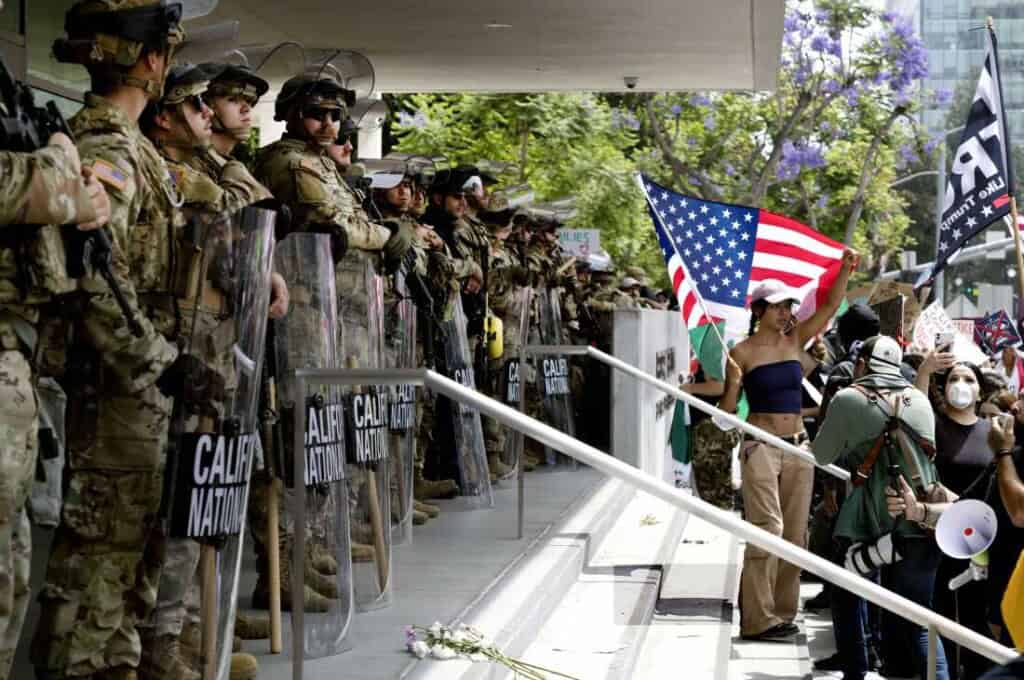
Title 32 Challenges: South Carolina vs. McMaster
As the federal government pulls back, litigation has shifted to the states. In January 2026, a pro-democracy lawsuit was filed in South Carolina (South Carolina Public Interest Foundation v. McMaster), challenging the Governor’s use of “Title 32” to send state troops to D.C. at President Trump’s request. Plaintiffs argue that state law does not permit the Governor to support federal law enforcement outside of South Carolina borders. As of March 2, 2026, the case has moved to the state Supreme Court on an expedited schedule. This battle over the “militia status” of the Guard is a hallmark of 2026 litigation, much like the constitutional debates in the Wren Clair lawsuit.
The financial and legal fallout of these deployments continues to mount. Beyond the $496 million spent on urban deployments in 2025, the administration is now facing a surge of civil rights claims from residents in “national defense areas” along the southern border. These cases, involving military trespassing charges against civilians, are taxing federal courts in New Mexico and Texas. This expansion of military-style zones into civilian life is a landmark 2026 development, mirroring the privacy concerns in the Steven Bonnell Lawsuit and the environmental protections sought in the Utah Great Salt Lake lawsuit.
Conclusion: The Longest Deployment in History?
The Trump National Guard lawsuit updates of 2026 suggest that while the “urban surge” has largely retreated, the legal status of the D.C. deployment will determine the future of civil-military relations in America. If Secretary Pete Hegseth extends the D.C. mission through the end of Trump’s term as proposed, it would become the longest domestic military deployment in U.S. history. As we await the appellate ruling this spring, the case remains a pivotal test for the separation of powers. For more on how 2026 litigation is reshaping technology, civil rights, and corporate responsibility, explore our latest reports on the Wisconsin mobile voting lawsuit and the Everglades immigration center lawsuit.