Rules of the Road
The Statutory Framework of Right-of-Way
Right-of-way is not a “right” to proceed, but rather a legal obligation for one driver to yield to another under specific circumstances. In 2026, most state vehicle codes define ROW through several key scenarios:
- Uncontrolled Intersections: The driver on the left must yield to the driver on the right.
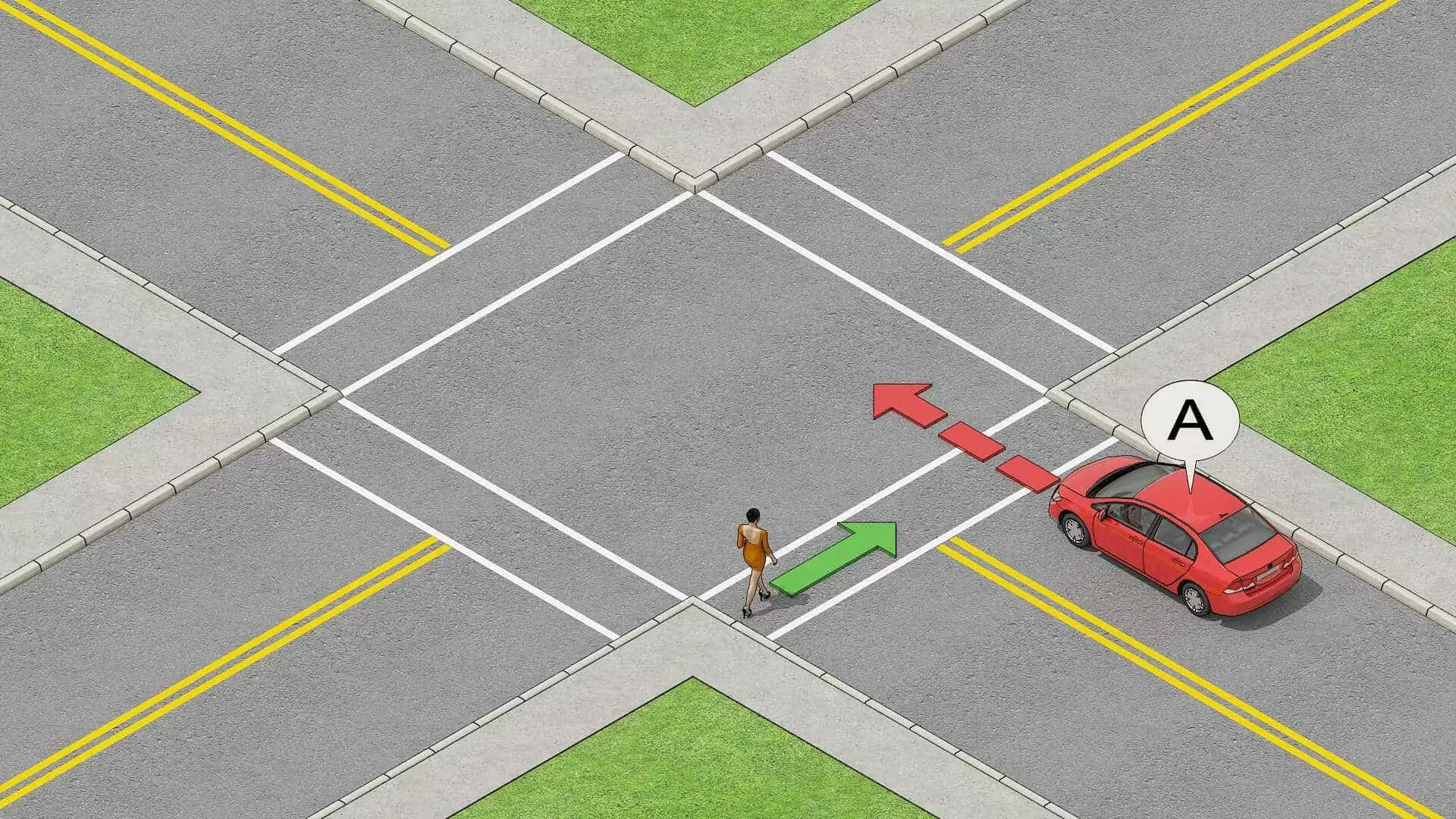
- Left Turns: Drivers turning left must yield to all oncoming traffic that is close enough to constitute a hazard.
- Four-Way Stops: The first vehicle to reach the intersection has the right of way; if two arrive simultaneously, the vehicle to the right proceeds first.
- T-Intersections: Drivers on the terminating road must yield to traffic on the through-road.
Civil Liability and Negligence Per Se
In many jurisdictions, a violation of a right-of-way statute is considered Negligence Per Se. This means that by breaking the traffic law, the driver is automatically presumed to have breached their duty of care to other motorists.
For a plaintiff, this simplifies the litigation process. Instead of proving that the defendant was acting “unreasonably,” the legal team only needs to prove that the defendant violated the ROW statute and that this violation was the Proximate Cause of the crash. This often leads to swifter settlements, as insurance companies are hesitant to take “Negligence Per Se” cases to a jury.
The “Immediate Hazard” Test:
In 2026, courts often apply the “Immediate Hazard” test to left-turn collisions. If a driver begins a turn and is struck, the legal question is whether the oncoming vehicle was an “immediate hazard” at the moment the turn started. Digital data from traffic cameras and vehicle telematics are now used to calculate these distances with mathematical precision.
Comparative Fault in Intersection Disputes
Even if one driver clearly violated the right-of-way, the legal consequences may be shared. Defense attorneys in 2026 frequently argue that the driver who had the right-of-way failed to exercise “ordinary care” to avoid the accident.
For example, if you have a green light but are traveling 20 mph over the speed limit when you hit a driver turning left, a jury may find you 30% or 40% responsible. Under Comparative Negligence rules, your total compensation would be reduced by that percentage. The law expects all drivers to maintain a “lookout” and take evasive action if a collision is preventable, regardless of who technically had the right to proceed.
Evidence in the Digital Age
In 2026, the “he-said, she-said” nature of intersection accidents has been largely mitigated by technology. The following evidence types are now standard in ROW litigation:
- Signal Preemption Logs: Municipal records that show exactly when a light turned red or green relative to the time of impact.
- Dashcam and Ring Camera Footage: Providing visual proof of which vehicle entered the intersection first.
- Event Data Recorders (EDR): Capturing the speed, braking, and throttle position of both vehicles in the five seconds prior to the crash.
Criminal and Administrative Consequences
Beyond civil lawsuits, a right-of-way violation can lead to significant administrative penalties. In many states, a ROW violation that results in “serious bodily injury” carries enhanced penalties, including:
- License Suspension: Mandatory periods where driving privileges are revoked.
- Criminal Negligence Charges: If the violation was particularly egregious (e.g., ignoring a stop sign while distracted), it may be escalated to vehicular assault.
- Insurance Surcharges: ROW violations are high-risk indicators for insurers, often leading to a doubling or tripling of premiums for several years.
Conclusion: The Burden of Precision
In conclusion, the legal consequences of violating right-of-way laws are designed to enforce a predictable flow of traffic. When that predictability is shattered by a failure to yield, the legal system holds the offending driver to a high standard of accountability.
As we move through 2026, the integration of smart-city infrastructure and vehicle-to-everything (V2X) communication is making it harder for negligent drivers to escape responsibility. For victims, the key to a successful claim lies in the intersection of traffic statutes and digital evidence. Ultimately, right-of-way laws exist to protect everyone, and the legal consequences of ignoring them ensure that those who take unnecessary risks at intersections bear the full weight of the resulting harm.