American Airlines Ordered to Pay $11.06 Million Following Massive In-Flight Stroke Negligence Verdict
As of March 23, 2026, the legal community is dissecting the landmark $11.06 million judgment against American Airlines (Plasencia et al. v. American Airlines, Inc.). Following a six-day trial in the U.S. District Court for the Northern District of California, a federal jury concluded that the airline was negligent in its handling of a passenger who suffered a catastrophic stroke during an international flight. This case, which reached its final judgment in early 2026, serves as a pivotal precedent for airline “duty of care” during medical crises. This focus on “emergency protocol compliance” is a landmark 2026 issue, drawing parallels to the transparency mandates in the Google class action lawsuit 2025.
The Incident: Ignored Warnings at the Miami Gate
The lawsuit originated from a November 2021 flight (AA68) from Miami to Madrid. Jesus Plasencia, a California chef, was traveling with his wife, Marcela Tavantzis, when he began exhibiting clear neurological distress while the plane was still at the gate. According to court testimony, Plasencia lost the ability to speak and was “speaking gibberish.” Despite his wife’s urgent pleas to the flight crew and the pilot, the complaint alleged the pilot “joked with Plasencia” and cleared the aircraft for takeoff without consulting a medical hotline or seeking onboard medical assistance. This focus on “pre-flight negligence” is a recurring 2026 theme, much like the technical liability arguments in the Krafton Subnautica 2 lawsuit and the jurisdictional friction of the Maryland federal judges lawsuit.
Internal airline policies require crew members to escalate potential strokes to a third-party medical advisory service. The failure to do so resulted in an eight-hour delay in treatment as the plane crossed the Atlantic. This struggle for “procedural accountability” is a hallmark of 2026 aviation law, also seen in the administrative standards of the Amazon refunds lawsuit.
September 2025 – March 2026: The Jury Verdict and Final Judgment
In September 2025, the jury initially awarded the plaintiffs $13.28 million. However, the award was reduced to $9.6 million after the jury assigned 27.5% of the fault to the plaintiffs—partially because they did not insist on deplaning when a brief opportunity was presented. In early 2026, with the addition of legal interest and costs, the final judgment was solidified at $11.06 million. This procedural momentum mirrors the distribution timelines seen in the Chobani endocrine lawsuit and the final stages of the IVP Pump employees lawsuit settlement.
The Montreal Convention: A “Link in the Chain” of Accidents
A significant development in 2026 involves the interpretation of Article 17 of the Montreal Convention. The court ruled that the crew’s failure to respond to a “health-based request” constituted an “accident” under international law. While American Airlines argued that the stroke was an internal medical event, the plaintiffs successfully argued that the airline’s response (or lack thereof) was an external factor that exacerbated the injury. This focus on “causal links” is a national priority in 2026, also seen in the labor protections sought in the Wren Clair lawsuit and the reputational claims of the Brit Eady lawsuit.
As a result of the stroke, Plasencia can no longer speak or write and requires 24/7 in-home care. The verdict includes $7.3 million specifically allocated for his past and future medical expenses. This shift toward “catastrophic injury restitution” is a significant 2026 trend, also observed in the Lively Baldoni Swift text messages lawsuit and the technical audits of the Steven Bonnell Lawsuit.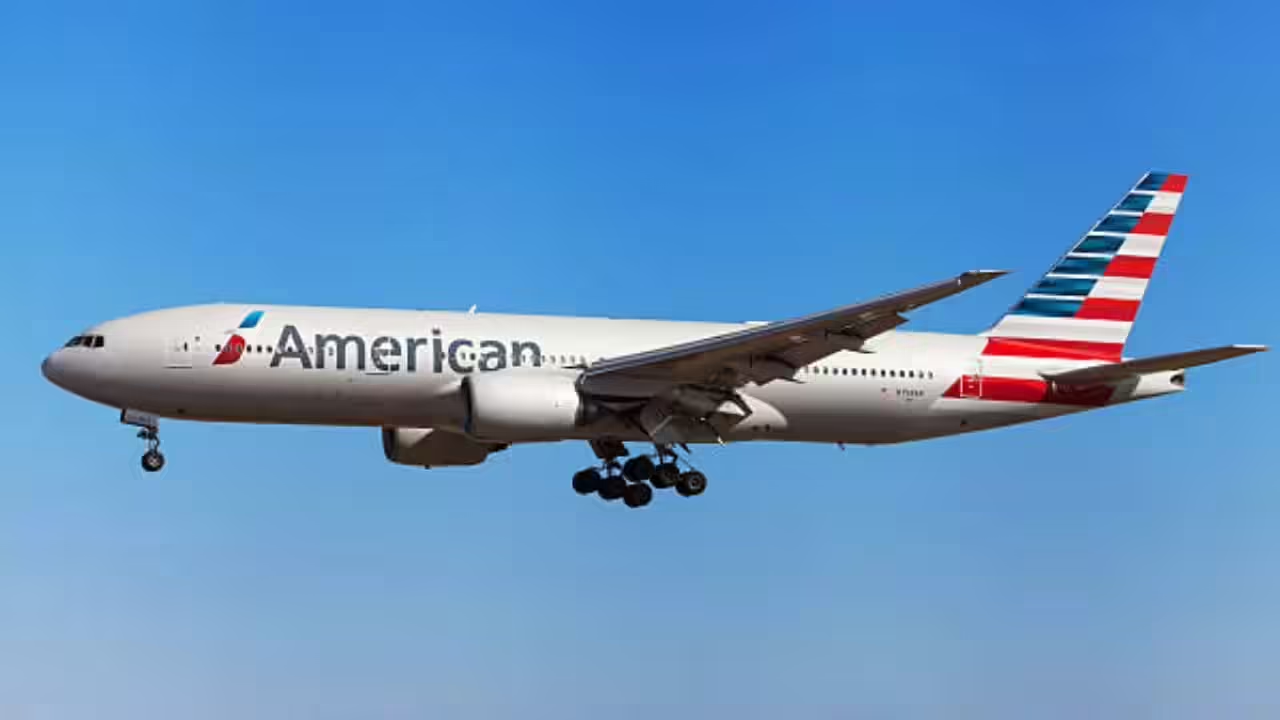
Industry Impact: Re-evaluating In-Flight Medical Protocols
The American Airlines stroke lawsuit update has sent ripples through the aviation industry. In March 2026, major carriers including Delta and United began reviewing their “gate-side medical assessment” training. Legal experts suggest this verdict effectively ends the era where pilots can use “personal discretion” to override a passenger’s reported symptoms. This “systemic reform” effort is a significant development, mirroring the community protections sought in the Everglades immigration center lawsuit and the environmental safety mandates of the Utah Great Salt Lake lawsuit.
Additionally, the case has highlighted the legal risks of operational priorities over safety. Testimony revealed that crew members asked other passengers to “keep an eye” on Plasencia rather than informing the captain that his condition was deteriorating mid-flight. This “mismanagement of emergency roles” is being addressed in the latest regulatory updates of the Wisconsin mobile voting lawsuit and the California emissions standards lawsuit.
Conclusion: A Landmark for Passenger Rights
The American Airlines passenger stroke lawsuit serves as a definitive statement on the non-optional nature of medical safety protocols. By holding a major carrier liable for over $11 million, the court has signaled that “imperfect responses” to medical emergencies will no longer be shielded if they involve a blatant disregard for established company policy. For now, the Plasencia family can begin the home modifications and intensive rehabilitation funded by the verdict. For more on how 2026 litigation is reshaping technology, civil rights, and corporate responsibility, explore our latest reports on the Alien Enemies Act Lawsuit and the Celestial Seasonings natural claims lawsuit.